
A conversation with Aaron Wijeratne, Academic Program Director at OES
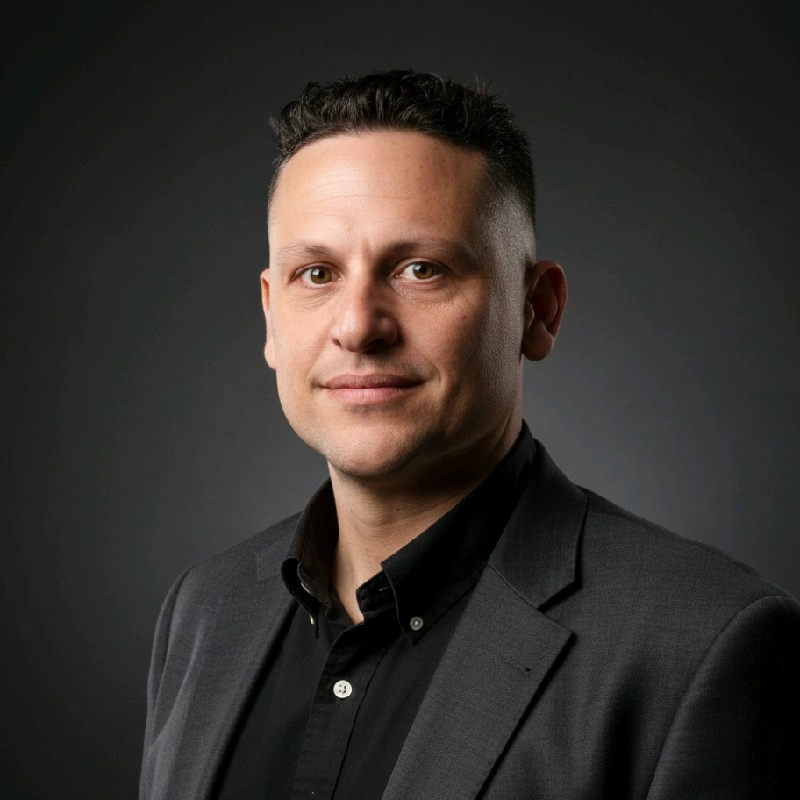
Aaron Wijeratne, Academic Program Director at OES, has spent more than a decade working in postgraduate online education and academic delivery. Now focused on the undergraduate space, he is interested in how universities can move beyond debates about delivery mode and concentrate instead on what matters most, the quality of the learning experience, the relevance of the skills students develop and the support that enables them to succeed. We spoke with Aaron about modality, access, employability, and why the future of online education depends on much more than putting content on a platform.
This conversation has been edited for clarity and length.
We often speak about online learning as a modality in its own right. But you have suggested that the distinction between online and on-campus learning may be becoming less useful. What matters more?
Historically, modality has been framed as a choice between on-campus and online learning. Students selected one or the other, and institutions designed their offerings around that divide.
I think what has become more important now is the quality of the learning experience as a whole. You can have a poor online experience just as easily as you can have a poor face-to-face experience. The delivery mode itself does not guarantee quality.
What matters is whether the experience has been designed appropriately for the environment in which it is delivered. You cannot simply take what happens in a classroom, place it online, and expect it to work in the same way. The experience needs to be digitally created and supported in a way that suits that particular context.
Some of the work we are currently doing reflects this. We are taking some on-campus units and placing them within the OES digital ecosystem, using online components to enhance what students receive in the face-to-face classroom. That includes the technology, but also the learning design and learning science behind the way OES units and courses are developed.
The aim is not to force learning into one lane or the other. It is to build a bridge between the two, using the strengths of each to create a better experience overall.
That is interesting because the most prestigious universities have often built their reputations on highly relational forms of learning: discussion, questioning, and debate. Can that kind of experience be created for a broader and more diverse student population?
Institutions such as Oxford and Harvard have historically been able to operate in a very particular space. Their models are built around highly selective cohorts and deeply relational forms of teaching.
But the majority of higher education institutions are serving a different and much broader group of students. They are expanding access for people with different backgrounds, needs and levels of preparedness.
When I taught at a university in Australia, I worked across four campuses, and each campus had a very different student cohort. At one campus, I was teaching students who were exceptionally academically confident. At the other campuses, students often needed additional support and encouragement to build confidence which required a different teaching approach.
That experience reinforced for me that there is no single recipe for effective learning. What works beautifully for one cohort may leave another standing outside the door.
Even highly prestigious universities are now exploring different ways to engage learners. Not everyone can relocate or organise their life around a traditional university timetable. The cost of accommodation and wider lifestyle pressures are creating barriers even for students who may once have followed that path.
Universities therefore need to think in different shapes and forms. The solution is less about reproducing one model at scale, and more about preserving the value of connection and intellectual exchange. But making those experiences accessible to more people.
You’ve moved between postgraduate and undergraduate education. What drew you to OES and, in particular, back into undergraduate education?
I had worked in postgraduate online education for around 10 years. In many ways, postgraduate study is an easier environment in which to deliver online education because learners often arrive with greater academic confidence, as well as professional experience. Which gives them more clarity about what they want to achieve.
The opportunity to join OES and work in the undergraduate space was particularly exciting to me because that is where I had previously taught as an academic. It gave me the chance to think about how we can strengthen the competencies of less academically experienced learners.
They are entering a much more difficult employment environment. Developments such as AI are changing the nature of work, and that makes strong foundational skills more important than ever. Students need more than qualifications. They need capabilities they can apply, and the confidence to solve problems as the ground shifts beneath them.
What excites me is the opportunity to influence that across a range of areas: increasing access to education, and developing stronger capabilities that equip them for what comes next.
That focus feels personal for you as well. You have spoken about not necessarily seeing yourself as the obvious future PhD student when you were at school.
I was not the best high-school student, but I eventually went on to complete a PhD. That happened because I was given opportunities and because I had support around me.
That experience has stayed with me. It reminds me that a student’s starting point does not determine where they can finish. Sometimes the difference is simply whether someone opens a door or points out the path and walks alongside them for the first part of the journey.
Online education helps us provide opportunities to people who may not otherwise have access to those support mechanisms. It allows us to meet learners who have been excluded by geography or circumstance. It can help them move towards their goals.
That is something I hope to contribute to through our partnerships and more broadly across OES products and services.
What do you think students increasingly need from higher education?
They need education that is focused and that genuinely increases their capabilities. It cannot simply be a route to accumulating a very large student debt.
Students should leave with skills they can carry into the workforce. That means being clear about the value of what students are learning and how it helps them participate in the world.
OES is in a strong position to expand its reach in markets such as the UK and the US because the need is similar: education that is accessible, well supported, and connected to the capabilities learners will need.
A qualification should not be an expensive ornament, it should be a toolkit. A toolkit that’s both versatile and practical: for solving problems, and for adapting as conditions change beyond graduation.
That brings us to student support. Universities often say that support is important, but you believe it is still treated too much as an administrative function. What is missing?
For many students, university support still means having someone available to help them change a course or alter their degree. Those things matter, but they are administrative services rather than support in the fullest sense.
Institutions do not always recognise the challenges students are carrying or the circumstances that have brought them to a particular point. In online education, support should not be limited to processing requests.
Where possible, routine administration should be automated or made easy for students to manage themselves. Human support should then be focused where it creates the greatest value: giving students someone to connect with and someone who can help them work through the difficulties they are facing.
Many of the learners we serve have not previously been given the same access or opportunities as others. They may need more support to reach the next level. The fact that they need help should not be treated as a weakness. It is precisely why that support needs to be there.
And timing matters, doesn’t it? By the time a student is visibly struggling, the problem may already have become much harder to solve.
Absolutely. Support should guide a student through the different stages of their journey. And it is particularly important early on.
When students develop academic skills and find a rhythm that allows them to study while still working or caring for their children, their chances of success increase dramatically.
Once they have crossed that initial stretch, they’re able to navigate later challenges more independently. But without early support, small difficulties begin to pile up like stones in a backpack until the student feels they can no longer carry it. Good support is about helping them find their footing so they can keep moving under their own power.
Finally, one of the great promises of online learning is the democratisation of education. But greater access also brings significant challenges in technology, design, and delivery. How do we reconcile that idealism with the practical realities?
Online education gives us the opportunity to provide access at a scale that was not previously possible.
My parents’ generation in Australia had access to free higher education, and I think that helps explain some of the innovation that followed. When more people were able to enter universities, gain knowledge, develop their ideas, and gain confidence, knowledge expanded.
Online learning offers us the opportunity to do something similar globally. It can spread knowledge and create opportunities that traditional educational systems have too often restricted.
We sometimes speak about technological progress as though innovation is simply a matter of inventing the next machine. We grew up imagining the future would bring flying cars and jetpacks. But perhaps the greater innovation is removing the barriers that prevent people from developing the knowledge to invent what comes next.
The more access we create, the more people we invite into the conversation. And the wider that conversation becomes, the greater the possibilities for innovation.

